to Consolidate Business Debt
You might find it difficult to keep track of all the due dates, interest rates and balances if your company has taken out multiple loans. It can be difficult to keep track of multiple credit accounts at once. A solution is to consolidate your business debts and streamline your finances.
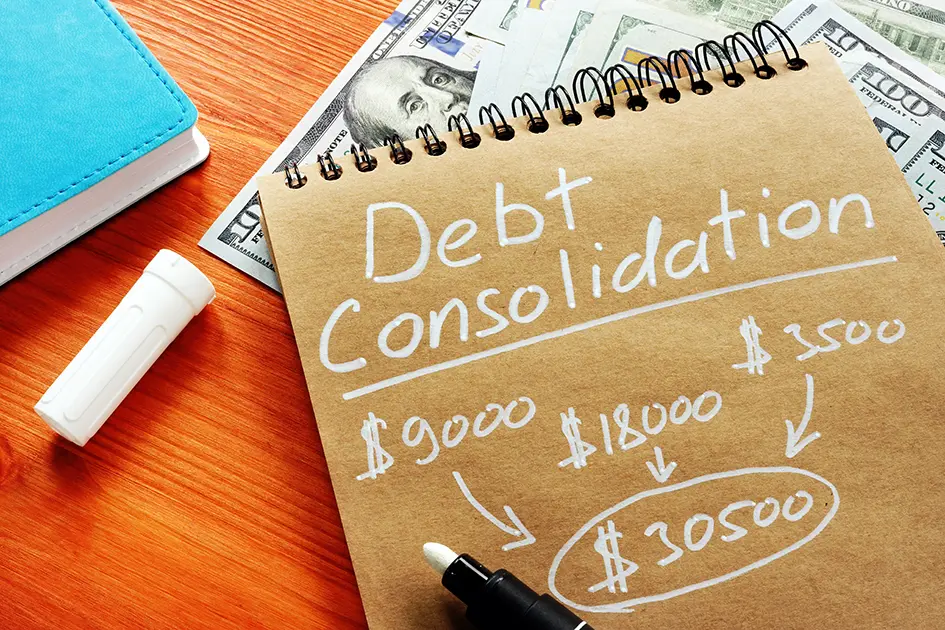
Consolidating business debt involves taking out a loan to pay off existing balances, and then combining multiple debts into one payment. This will simplify your repayment process and, in some cases, may allow you to get a lower interest rate.
Continue reading to learn more about how debt consolidation works , and whether it is the right strategy.
What is a Business Debt Consolidation loan?
A consolidation loan for business debt is used to pay off current balances. This allows you to combine multiple forms of debt in one payment.
Although it can be difficult to track multiple payments, consolidation loans for business debt allow for greater ease and make it much easier to repay what you owe.
A business debt consolidation loan should pay off all your outstanding balancesspan type=”font-weight 400 ;”>. If your total debt exceeds $100,000, then you should consider a consolidation loan of at least $100,000.
Sometimes, you may be able to get your new consolidation loan for business debt at a lower interest than what you have been paying. This could allow you to lower or save your monthly payments.
Consolidation loans for business debt
There are many forms of business debt consolidation loans, but there are generally two types.
Term Loans
Banks and other lenders can offer term loans. Term loans are great for consolidating business debt because they can be deposited as a lump sum and allow you to pay off existing debts immediately.
Term Loans have fixed interest rates and repayment terms. This means your monthly payment will remain the same throughout the term of the loan.
SBA loans
SBA loans can be obtained through participating banks or online lenders. They are funded by the Small Business Administration. SBA loans are another viable option for consolidating business debts, as they offer the best rates on the market.
What is the difference between Business Debt Consolidation and. Refinancing?
Refinancing and business debt consolidation may look similar at first glance. Both involve taking out new loans to pay off existing debt. Each strategy serves a different purpose.
Refinancing has two main goals. One, to get a lower interest rate and longer repayment terms. Refinancing doesn’t necessarily involve multiple types of debt. Businesses will often refinance multiple loans to save money.
Consolidating business debt is intended to replace multiple types of debt with one loan. While it is possible to simultaneously secure a lower interest rate, saving is not the main goal of debt consolidation. Instead, the goal is to reduce multiple balances and instead focus on simpler repayments.
Deciding Whether to Consolidate Business Debt
It is important to weigh all the pros and cons before you make a decision about whether to consolidate your business’ debt. To help you decide the best move for your company, consider the following.
The Benefits of Consolidating Business Debt
Consolidating business debt can provide many benefits. Here are the most popular.
Manageable payments
Simplified payments are the most common reason that businesses turn to debt consolidation. It can be hard to keep track and pay multiple balances and due dates. Combining everything into one loan is a better option. It makes it easier to keep track of all your debt.
Increased cash flow
You can track your payments more efficiently by replacing multiple balances with one debt consolidation loan. It will be easier to plan ahead and control your cash flow.
Potential savings
You may be eligible for a lower interest rate on your debt consolidation loan if your credit score has improved or any other qualifications have changed significantly since your last financing. While it is not the primary goal of debt consolidation for business loans, it can be a beneficial side effect.
Possible credit score increase
You’ll be able to track due dates better and make sure you pay your debts on time by merging them into one payment. This will improve your business credit score and help you get more favorable loans down the road.
HTML0? HTML0 _____ ______
You may be able get a lower interest rate for a consolidation loan to pay off your debt quicker.
Drawbacks to Business Debt Consolidation
Consolidating business debt with loans are expensive. If you don’t consider them carefully, they can reduce the potential benefits.
Potential fees
Consolidating debt can be expensive. You will have to pay fees for processing, underwriting, closing, and any other costs associated with your loan. These fees can quickly add up so make sure to weigh the costs against the benefits.
Higher interest rates
It is possible that your interest rates on your debt consolidation loan may be higher than your current loans. It’s possible, however, that your interest rates will be higher than those on the loans you consolidate, depending on market conditions and your personal qualifications.
To get the best rate, compare several debt consolidation loan offers. A B2B platform such as National Business Capital can help you get a better understanding of your options. Instead of applying to each lender individually, you can submit one digital application and receive multiple offers.
Does not solve the underlying financial problems
Consolidating your loans will not provide much relief if your company’s debt-to income ratio is high. Instead of consolidating your debt, you will need to address the root causes of your business.
Understanding whether a Consolidation Loan for Business Debt is the Right Move
While it is helpful to weigh all the pros and cons of business debt consolidation, you should also consider other factors. Here are some examples of situations where consolidation could prove to be a good solution.
Large amounts of various types of debt
Every loan you have taken out has a repayment plan. They may not always match up. Consolidating your debt with multiple lenders can help you track and manage your debt repayments.
Consolidating accounts can help you simplify your finances and reduce the amount of bills you need to manage.
High credit score
You may be eligible for better terms on your debt consolidation loan if your company has good credit or you have made significant improvements to your credit score since you first took out financing. This will allow you to save money and could even lower your loan’s cost over the term.
Viable cash flow
A debt consolidation loan can lower your monthly payments, but it may not. Market interest rates, credit scores, and other qualifications will all play a role in how much you pay. To ensure that you have sufficient cash flow to pay your new payment, you will need to review all of your debt consolidation loan offers.
How to get a Consolidated Business Debt Loan
There are many steps that you will need to take to consolidate your business debt. These steps can vary depending on the lender. In most cases, however, the following steps can be expected.
1. Assess your company’s debt
To determine how much debt consolidation loan you will need, go through all your accounts. It’s a great time to review the policies that are associated with your credit accounts. You might also want to check if your balances have prepayment penalties. This could prevent you from getting a consolidation loan.
2. Examine your credit score
If your credit score is good, you will be more likely to get approved and can qualify for better terms. A score of at least 625 is required. You may still be eligible for a consolidation loan on your debts if you have a lower credit score depending on which lender you work with.
3. Explore different lenders
Before committing to a consolidation loan, it is a good idea consult with multiple lenders. Working with National Business Capital, a B2B financing company, is a better way to instantly generate multiple offers than filling out several applications. You can then compare your details to find the right loan for you.
4. Submit your documents
When you apply for a loan, you will typically be required to submit a few financial documents from your business. However, the exact requirements may vary from lender to lender. You should prepare your tax returns, financial statement, and cash flow statements.
5. Accept your business debt consolidation loan
Once you have accepted a loan offer that is fair, you can move forward to closing. Although it may take some time before your funds are deposited, once they do, you should pay all your current debts and balances. You can then focus on the new simplified payments for your debt consolidation loan.
Apply for a Consolidation Loan for Business Debts With National
National Business Capital offers a variety of options for business debt consolidation loans. The online application takes only minutes and connects you to over 75 lenders. It’s easier than ever to search for the best loans and choose the right one. Get started!
The post Consolidating Business Debt was first published on National Business Capital.