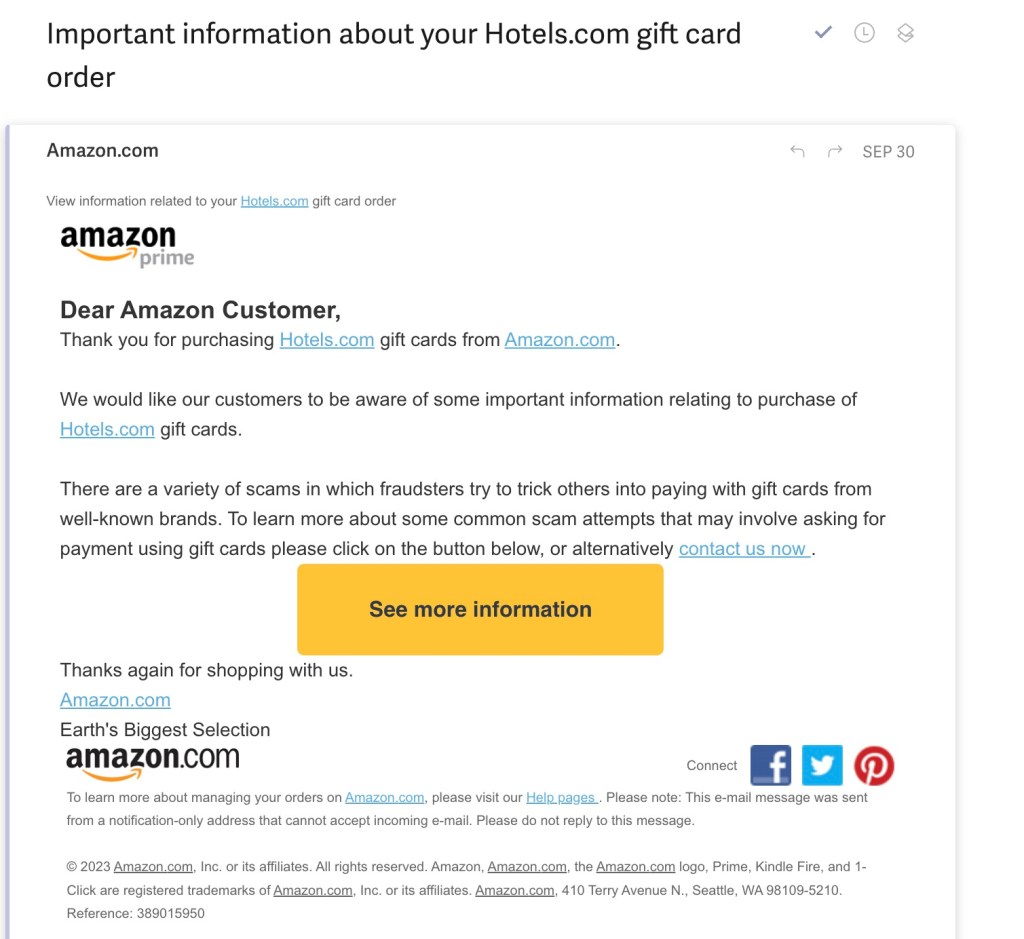
n from the Amazon gift-card snafu
This email was sent to millions of people last night.
It’s not a mistake, but it is legitimate. It’s a mistake because:
- The subject line is incorrect (you did not buy a gift certificate yesterday).
- It was sent on Saturday at 8pm
- The formatting is wrong and it looks like a scam
This is a great example of what we should not do.
Fix it first if you made a mistake in an email. You can fix the mistake by email and on your website. Even if the note is embarrassing, let everyone know who received it.
If your business is based on email, you should establish a uniform look and feel. You can also implement an approval process, and confirm the fact that it was sent. If you receive an email from my company, the message will be posted here in . If not, then it is a scam.
Amazon’s bungling of both parts of the process (they received thousands and thousands complaints last night and overwhelmed their hardworking frontline staff) has opened up the door to countless spammers, scammers, and con artists who lack imagination but can follow a trail.
It may not seem related, but part of the issue is that people are afraid to write clearly. This is a sign that I saw yesterday at Avis:
I’m fairly sure that the person responsible for making this sign does not actually speak in this manner. Maybe if the sign had read,
“We do not have a carwash here, but we clean the interiors of our vehicles regularly.” We’ll pay up to $15 for each rental if you want to have a car washed. Thanks for understanding.”
The Amazon email was both overwritten and poorly edited. The formatting made it worse because I didn’t explain what the message was.
The bureaucracy then refused to take immediate responsibility and explain it to millions of people.
Trust is lost as a result fo fog and denial.