l Marketing For Mobile Apps: Tips & Tools [2023] //
Email marketing is one of the best ways to market your business.
Its nature allows companies and industries of all sizes to use it, including mobile app marketing, to reach their target audiences, increase engagement, and boost conversion.
We’ll look at how to create a simple but effective Email Marketing for Apps Strategy, including:
-
- The benefits
- Start with these tips
- Email tools that you can use
Let’s get started.
Email marketing for mobile apps: Benefits
Email marketing offers many benefits to businesses, as we have already mentioned. The same benefits apply to mobile applications.
Email can help you in the following ways:
- Reach out to your audience.target customers with email campaigns that are tailored for their interests, behaviors, and demographics.
- Encourage downloads and signups by adding links to emails.Adding links to your email can encourage subscribers to install your app.
- Increase app engagement and usage: Keep them informed of new features, offers or updates.
- Increase user loyalty by educating your users: provide valuable content such as tutorials and tips, and VIP offers in the app to increase loyalty.
- Email is one of most cost-effective marketing channels.
Email marketing is an easy and effective way to grow and promote your mobile app.
Let’s now look at some of the types of email marketing campaigns you can use.
Email Types To Use
You need to decide what messages you want in your email marketing campaign based on the nature of your business. If you run an eCommerce app, for example, you will need to send an email to users who have abandoned their carts to remind them to use it.
Here are some examples of email campaigns that you can use to increase your app’s engagement and retention.
Onboarding campaigns
These messages can be used to introduce new users with your app. You will be able to engage users better and reduce app abandonment because of insufficient nurturing.
Onboarding campaigns include emails launching apps, tutorials and tips.
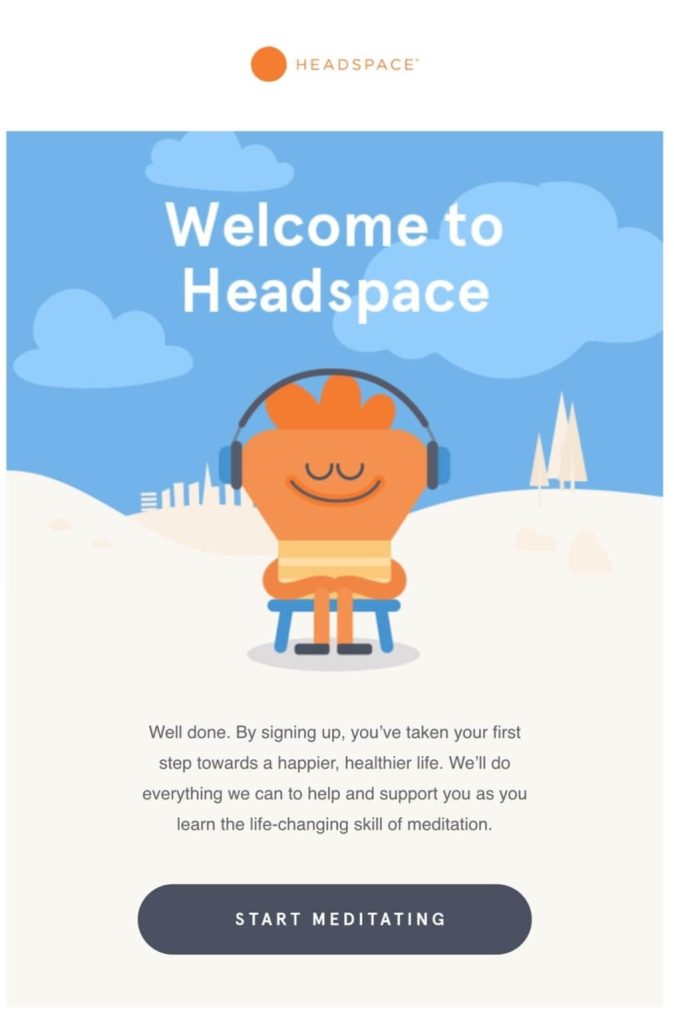
Here is an example welcome email from the headspace application:
It’s not necessary to make welcome emails complicated. Keep them friendly, helpful, and visually pleasing. You can use our templates to help you with your email copy.
Retention Messages
The best way to stop users from abandoning and churning your app is with dedicated customer retention emails.
The campaigns can include educational content and personalized product recommendations to encourage users to use the app.
Most common retention campaigns include
- Cart abandonment messages
- Reminder emails
- Thank-you campaigns
- Announcements of Feature Articles
Promotional email campaigns
Special offers and discounts can be delivered with promotional messages. You can offer your eCommerce app users a discount of X% when they buy something via your app, or a discount for their subscription.
Use promotions to target specific email lists, such as those who are inactive or have not purchased from your app for a long time. Here’s a Uber example:
Re-engagement Campaigns
Email marketing campaigns can be used to reengage inactive users by offering incentives, special offers or personalized messages. This will encourage them to return to your app and use it again.
You can also use these campaigns as a way to identify users who are not engaged and retarget them by sending push notifications or more personalized content, or removing them from your list.
Feedback Emails
Finally, feedback campaigns can help you gather insights about your service and app. These emails may be in the form of surveys, polls or questions that will lead to suggestions.
Here is an example of Free Now.
How to Create an Email Marketing Plan for your Mobile App
Let’s start with the tools to create an email marketing strategy for apps.
1. Select an Email Marketing Tool
Find the right tool for the job before you begin sending out your email campaigns. You need an email platform to automate, create and deliver your messages.
You should choose a platform that is user-friendly for beginners if this will be your first experience with an email service provider. For example, ESPs such as Moosend or Constant Contact, are simpler than ActiveCampaign which is designed for advanced users.
It’s important to take into account your budget, your email list, features that you need, and level of support when looking for the best Email Marketing Platform. The best tool for mobile apps will have the following features:
- a drag-and-drop editor
- Marketing automation tools
- responsive email templates
- Landing pages and pop-ups
- CRM Functionality
- Reporting and Analytics
Moosend’s platform allows you to access all of the features above, while offering affordable pricing. You can either create your campaign from scratch, or you can customize a pre-made design to save time.
You can customize the Newsletter Templates above on Moosend’s template library. Use free plans and trials in order to test platforms before purchasing them.
Sign up for a 30-day trial of Moosend to test the editor.
2. Create Your Email List
A mobile app marketer’s email list can be a very valuable tool. A great way to spread updates and news is by creating an email list before the launch of your app.
How do you build an email list from scratch? You can collect email addresses by using your website’s newsletter signup form.
Sign-up forms for newsletters don’t have to be complex. You can collect your subscribers’ names, email addresses or locations.
You can personalize and segment your emails to make them more relevant for each recipient.
The perfect popup will have:
- A clear headline
- Value copy
- The required form fields
- A CTA button that converts
You should also highlight the benefits that your new users and customers will receive by signing up. If you want to maintain a healthy list, you should use double opt-in. This will ask your new subscribers for their email address before adding them to your mailing list.
Let’s create a mobile app email marketing campaign now that you have the tool and your email list.
3. Start with a Converting Subject Line
The subject line is very important, as it will determine how many people open your email campaign.
Follow these simple tips to create the best one for your users:
- Keep your subject lines short:Make sure they are concise and to-the-point. Keep them to under 50 characters. This will make it easier for people to read.
- Use actionable words:Use verbs and actionable phrases to make your subject line more appealing.
- Make them personal: make messages more personalized by using recipient information such as the name of the recipient or any other relevant information collected during signup.
- Make your subject lines fun.you could use emojis or wordplays to increase the open rate and make them more appealing.
- Find the best subject line for your audience by monitoring email metrics.
Your subject line is the first thing that your app users see. Make it interesting and concise for better click-through and open rates.
You can use a subject-line tester, such as Refine, to assist you if you find subject-line creation difficult.
4. Create a Beautiful Email Design
It’s now time to concentrate on your campaign. A converting message is the result of a combination between great design, valuable contents, and strategic elements.
Save time and effort by starting from scratch, or choosing a visually pleasing design. Add your branding so that your campaign will resonate with your target audience.
Use your brand colors and the appropriate email fonts to connect your message to your app. Be consistent throughout your emails.
Beat’s Free Now (currently) is an example.
Subject: Hello!
This app uses trademark colors and fonts for a simple and beautiful campaign that is aimed at first-time users.
colors are a great way to influence the perceptions and feelings of your recipients.
5. Add the Right Elements
It’s now time to complete your campaign by adding the right elements.
You need to focus on these four things to be successful.
- Email copy: write compelling content to intrigue your recipients. To make your message more friendly, use a conversational tone and highlight the benefits that they will receive.
- Use eye-catching visuals to enhance your campaign.Use images, videos GIFs graphics and interactive elements. Do not overuse these elements because they may distract the audience from your CTA.
- A call-to action that is clear: Insert a button with a CTA to guide the subscriber in taking the desired action. Make them stand out with vibrant colors and useful copy.
- A button to unsubscribe:don’t forget to put one in a prominent position so that your subscribers can opt-out of your email list.
This is a fantastic thank-you email from Duolingo plus which shows all the above elements:
6. Insert Links To Your Mobile App
Sending an app launch campaign to your users will alert them when it is time to launch your app.
To increase your user base you will need to include download links each time you send a campaign. can create re-engagement campaigns after a campaign launch or you can add a section to your newsletters that promotes signups.
Here Canva includes a section to promote the mobile version of their app in addition to their desktop version.
7. Make Your Campaign Mobile Friendly
You need to make sure that all your emails are mobile-friendly, as you want to encourage your subscribers to use your app. Use responsive emails to adapt to different screens and test your email across different devices.
To avoid problems, most email service providers allow you to preview your campaign or create mobile versions.
Moosend, for example, lets you preview your design before sending it to your audience. This allows you to fix any issues that may arise.
Before you run into problems, it is important to use tools like these to improve your email marketing strategy for mobile apps.
8. Track Your Performance
It’s easy to create a stunning campaign for your app, but finding out what your audience wants will take some additional work.
Your email marketing tool provides you with all the tools you need to monitor and test your emails.
You can track your performance using the reporting and analytics tools available in your ESP. You will be able see important metrics for your emails, such as:
- Open rates
- click-throughs
- Conversions
- Bounce rates
- Open rate by device type and location
9. Optimise Your Campaigns
You can then use the data you collected to measure whether your email campaign was successful or not.
You can test different designs and variations of content if your metrics aren’t perfect. This will help you determine what works best for your target audience. A/B Testing will allow you to compare and improve different aspects of your email campaign for higher click-through and open rates.
After we’ve covered the steps to building your email strategy for apps, let’s look at some of the email tools that you can use.
3 Best Apps Email Marketing Services
We’ll look at three of the most effective email marketing apps, and their features, to help you kickstart your email campaign.
Moosend
Moosend offers a complete email marketing platform and marketing automation for small businesses, startups, eCommerce stores and other types of business. It has a range of features to create email newsletters, automated workflows, autoresponders and landing pages.
Moosend’s editor allows you to create visually appealing emails, segment your audience and track performance with real-time analytics and reporting. This service offers advanced email automation features. You can set up abandoned-cart sequences for new customers and recommend products to them.
can also be used to set up transactional email, ensuring that your app users get all the information they need regarding in-app purchase, confirmation emails and password resets.
Moosend’s excellent deliverability (98%) ensures that your campaign lands in the inbox of subscribers. It integrates with a variety of apps such as CRM software, eCommerce platforms, and social networks to streamline your strategy.
Pricing: Paid Plans Start at $9/month for the Pro subscription with 500 contacts and unlimited email.
You can also sign up for the free 30-day trial and try out all the features without committing.
Mailchimp
Mailchimp, a popular emailing software, has advanced features that will help you put your email marketing strategy for apps in motion.
This service has a wide range of features to assist you, such as a user-friendly newsletter builder, a pre-made editor for customer journeys, segmentation, analytics and more.
Mailchimp also provides robust A/B testing tools for optimizing your campaigns. Multivariate Testing is available in the Premium Plan if you need more advanced functionality.
This tool also integrates with a variety of third-party applications, such as Shopify, to help you in your endeavors.
Pricing: Paid Plans Start at $20/month for the Standard plan, which includes 6K emails sent per month. There is a limited-time free plan for 500 subscribers and 1K emails.
This tool is popular but has a steep price structure. If you’re just starting out, you might want to check out some of the top Mailchimp alternatives on the market.
Constant Contact
Constant contact offers a number of digital marketing tools including an HTML editor and SMS marketing tools.
This solution provides you with an editor that allows you to drag and drop and a workflow creator for creating automated messages and sequences.
Moreover, you may benefit from event marketing features to boost registrations, collect feedback and gain insights.
Constant Contact offers a variety of resources, including webinars, training and a knowledge base. These can help you get the most from the tool.
Subscriptions are $12/month for Lite and $34/month Standard. The tool is also available for 14- or 60 day free trials.
Creating A Solid Email Marketing For Mobile Apps Plan
Email marketing can be a cost-effective method to engage new and existing users and promote your app.
You can use the strategies above to create a strategy that will increase engagement, downloads of your app, and keep users informed.
Try out the free marketing plans and solutions you are interested in before you begin.
Check out our Email Marketing Best Practices Guide to learn more about how to improve your results.
The post Mobile Apps Email Marketing: Tips and Tools [2023] first appeared on Email Automation Platform for Thriving Business.